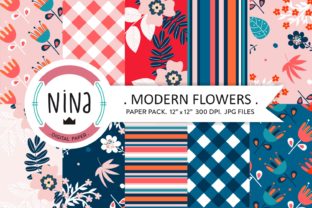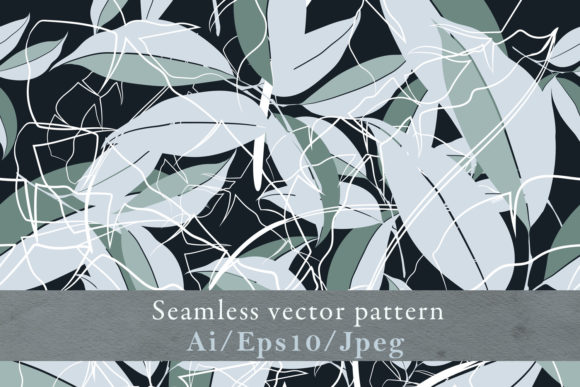
Abstract Flat Floral Pattern: Elevating Modern Design with Versatile Digital Assets
In the rapidly evolving landscape of digital and print design, the aesthetic choice of background and surface texture often dictates the success of a visual project. Among the myriad options available to contemporary creators, the abstract flat floral pattern has emerged as a definitive staple for professionals seeking balance between organic warmth and geometric precision. Unlike traditional botanical illustrations that strive for scientific accuracy, these designs distill nature into essential shapes, bold colors, and rhythmic compositions. This stylistic approach aligns perfectly with current user interface trends, packaging demands, and branding strategies that favor clarity over clutter.
However, the visual appeal is only one component of professional asset selection. For designers, marketers, and business owners, the true value lies in the technical delivery and legal security of the file. A high-quality abstract flat floral pattern is not merely an image; it is a comprehensive package that typically includes an EPS file, JPEG file, help file, and license. Understanding the specific utility of each component transforms a simple download into a robust tool for commercial and personal projects, ensuring that creativity is never bottlenecked by technical limitations or legal ambiguity.
The Shift Toward Stylized Botanical Aesthetics
The resurgence of floral motifs in modern design is not a return to Victorian complexity but rather an evolution toward minimalism and abstraction. As screen real estate becomes more precious and consumer attention spans shorten, intricate details often get lost or create visual noise. Abstract flat floral patterns solve this problem by utilizing solid color fields and simplified silhouettes. This "flat" design philosophy ensures that the pattern remains legible at any scale, from a massive trade show banner to a tiny mobile app icon.
This shift also reflects changing cultural attitudes toward nature and technology. Audiences today crave organic connections in digital spaces, yet they expect the polish and consistency of modern tech. An abstract interpretation bridges this gap, offering the psychological comfort of natural forms without the chaotic unpredictability of real-world photography. For entrepreneurs and educators creating course materials, social media graphics, or product packaging, this style communicates professionalism and approachability simultaneously. It suggests a brand that is grounded yet forward-thinking, avoiding the dated feel of hyper-realistic stock photos while maintaining human-centric warmth.
Why Vector Format Matters for Professional Workflows
When acquiring an abstract flat floral pattern, the inclusion of an EPS (Encapsulated PostScript) file is arguably the most critical technical specification for professional users. While raster images have their place, the EPS format represents infinite scalability and editability. In a practical workflow, a designer might need to apply the same floral motif to a business card and a billboard. With a vector-based EPS file, the artwork can be resized indefinitely without pixelation or loss of quality.
Beyond scaling, the EPS format allows for deep customization. Because abstract flat florals are constructed from mathematical paths rather than pixels, users can easily modify individual elements. A marketing team can adjust the color palette to match a seasonal campaign, separate layers to create depth, or rearrange floral elements to fit irregular layouts. This level of control is impossible with standard raster formats. For freelancers and agencies managing multiple client brands, owning the source vector file reduces the need to purchase new assets for every minor variation, significantly improving return on investment and workflow efficiency.
Raster Compatibility and Immediate Application
While vectors provide long-term flexibility, the included JPEG file serves the need for immediate accessibility and broad compatibility. Not every stakeholder in a project possesses vector editing software like Adobe Illustrator or Affinity Designer. Clients, content managers, and educators often require a preview or a ready-to-use asset for platforms that do not support EPS uploads. The high-resolution JPEG acts as the universal translator of the design package.
In modern web and social media workflows, the JPEG version of an abstract flat floral pattern is frequently the workhorse. It is optimized for fast loading times and consistent rendering across browsers and devices. When selecting a package, professionals should verify that the JPEG is provided at a high DPI (typically 300 for print readiness) and in a color space appropriate for the intended use, such as RGB for screens or CMYK for physical products. Having both formats included eliminates the friction of converting files manually, which can sometimes result in color shifts or artifacting. This dual-format approach acknowledges the reality of cross-functional teams where creative assets must flow seamlessly between specialized designers and generalist users.
Navigating Usage Rights and Documentation
Technical specifications are meaningless without clear legal parameters. The inclusion of a dedicated license file and help documentation distinguishes professional-grade assets from amateur or risky downloads. In an era of increasing copyright enforcement and automated content detection, understanding exactly how an abstract flat floral pattern can be used is a non-negotiable aspect of risk management for businesses and creators.
The license file typically delineates boundaries regarding commercial use, modification rights, and redistribution. For example, a standard license might allow for unlimited end-products but prohibit reselling the pattern itself as a standalone digital good. Entrepreneurs using these patterns for merchandise, such as apparel or stationery, must pay close attention to print-run limits or extended license requirements. Ignoring these details can lead to costly legal disputes or platform takedowns. Conversely, a clear license provides peace of mind, allowing creators to focus on innovation rather than compliance anxiety.
The accompanying help file serves as a vital bridge between the asset and the user. Even experienced designers encounter unique file structures or font dependencies. A well-crafted help document explains layer organization, color swatch management, and software compatibility. For hobbyists or those newer to design tools, this documentation accelerates the learning curve, turning a complex vector file into an accessible resource. It demonstrates the creator’s commitment to user experience, reinforcing trust and reducing support inquiries.
Practical Applications Across Industries
The versatility of abstract flat floral patterns extends far beyond decorative backgrounds. Their structured yet organic nature makes them uniquely suited for functional design challenges across various sectors.
- Brand Identity Systems: Modern brands often struggle to maintain visual interest within strict minimalist guidelines. Abstract florals provide a secondary graphic system that adds texture to stationery, signage, and digital templates without competing with the primary logo or typography.
- Educational Materials: Textbooks, worksheets, and e-learning platforms benefit from visuals that engage without distracting. Flat floral elements can serve as section dividers, bullet points, or margin decorations that soften academic content and improve readability for diverse age groups.
- Sustainable Packaging: As brands move toward eco-friendly packaging, heavy ink coverage is often reduced. Abstract flat patterns utilize negative space effectively, allowing for striking designs that use less ink and align with sustainability messaging while maintaining shelf presence.
- Digital Product Design: App developers and UI designers use these patterns to create onboarding screens, empty states, or premium subscription tiers. The flat aesthetic integrates naturally with modern design systems like Material Design or Human Interface Guidelines.
Future-Proofing Creative Assets
Selecting an abstract flat floral pattern that includes EPS, JPEG, help, and license files is ultimately an exercise in future-proofing. Design trends are cyclical, but the fundamental need for scalable, legally safe, and versatile assets remains constant. By prioritizing comprehensive packages, professionals insulate themselves against obsolescence. A vector file created today can be repurposed five years from now for a medium that does not yet exist, whereas a low-resolution raster image has a finite lifespan.
Furthermore, the emphasis on proper licensing and documentation reflects a maturing creative economy. As the barrier to entry for design lowers, the distinction between professional and amateur output increasingly hinges on process and compliance rather than just aesthetics. Businesses that invest in properly documented assets signal respect for intellectual property and operational maturity. This diligence builds brand equity that transcends any single visual trend.
For the curious reader or aspiring creator, engaging with these comprehensive packages offers an educational opportunity. Dissecting a professional EPS file reveals construction techniques, color theory applications, and organizational best practices. Reading the license clarifies industry standards. Using the help file improves software literacy. Thus, the abstract flat floral pattern becomes more than a decorative element; it serves as a microcosm of professional design practice, integrating art, technology, law, and communication into a single, cohesive resource.
Ultimately, the enduring relevance of this design style lies in its adaptability. It respects the viewer's intelligence through abstraction, accommodates modern production needs through vector formats, and protects the user through clear licensing. Whether you are a freelancer building a portfolio, a marketer launching a campaign, or an educator designing a curriculum, ensuring your assets meet these comprehensive standards is the foundation of sustainable, high-quality creative work. The combination of aesthetic resonance and technical completeness ensures that your projects remain resilient, compliant, and visually compelling in an ever-changing digital environment.