Small Floral Tulips Seamless: Practical Applications for Creative Projects
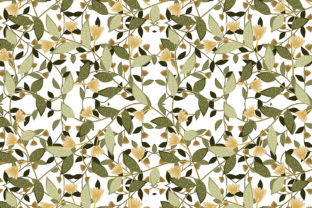
When designers and crafters search for the perfect botanical element, they are often looking for a balance between elegance and versatility. The Small Floral Tulips Seamless pattern offers exactly that equilibrium. Unlike bold, oversized floral prints that demand attention and dictate a specific mood, this delicate motif provides a subtle texture that enhances rather than overwhelms. It is a design asset rooted in classic spring aesthetics but refined enough for year-round use across various mediums. Whether you are working on digital interfaces or physical textiles, understanding how to leverage this specific type of seamless vector can significantly elevate the perceived quality of your final product.
Elevating Print-on-Demand and Apparel Design
One of the most immediate real-world applications for the Small Floral Tulips Seamless pattern is in the print-on-demand (POD) industry. For creators selling on platforms like Etsy, Redbubble, or Amazon Merch, finding patterns that appeal to a broad demographic without looking generic is a constant challenge. This particular tulip design bridges the gap between vintage nostalgia and modern minimalism.
Consider the difference between using a high-contrast rose pattern versus this small-scale tulip repeat. The latter allows for greater flexibility in garment color selection. Because the scale is petite, it reads as a texture from a distance and reveals its botanical detail only upon closer inspection. This makes it exceptionally useful for:
- All-over print leggings and yoga pants: The small scale prevents the pattern from distorting unflatteringly over curves.
- Children’s clothing: The dainty size is proportionate to smaller garments where large florals might look clumsy.
- Men’s casual button-downs: When rendered in muted tones like navy, olive, or slate, the small tulip motif becomes a sophisticated micro-print suitable for menswear.
- Accessories: Tote bags, scrunchies, and face masks benefit from a pattern that remains recognizable even when the fabric is gathered or folded.
The inclusion of a JPG file alongside the vector EPS is particularly valuable here. While the EPS ensures crisp edges for professional textile printing, the JPG serves as an instant mockup tool. Designers can quickly overlay the raster image onto 3D apparel templates to visualize the end result before committing to the more complex vector workflow.
Digital Stationery and Web Backgrounds
Beyond physical products, the Small Floral Tulips Seamless pattern plays a crucial role in digital design. In an era where screen fatigue is real, soft organic patterns provide visual relief without sacrificing professionalism. The white background variation is specifically optimized for web performance and digital stationery.
For wedding planners and boutique stationers, this pattern is a workhorse. It serves as an ideal liner for envelopes, a watermark for digital invitations, or a border for RSVP cards. Because the design is seamless, it can be tiled indefinitely to create custom-sized assets without visible break lines. The white background also simplifies the process of changing the base color digitally; a simple multiply blend mode in Photoshop or Illustrator allows the white to disappear, letting the tulips float over any pastel or metallic background color instantly.
Web designers also find utility in this asset for lifestyle blogs, skincare brands, and wellness coaches. A full-screen hero section featuring a low-opacity version of this pattern adds depth to a website without compromising text readability. It signals "organic," "fresh," and "gentle" to the user subconsciously, which is essential for branding in the beauty and wellness sectors. Unlike dark or busy patterns that require complex CSS overlays to make text legible, the white-based small floral tulips pattern maintains high contrast ratios naturally when used at reduced opacity.
Packaging and Brand Identity
Small businesses often struggle with packaging that looks cohesive but not expensive. The Small Floral Tulips Seamless pattern offers a cost-effective way to add branded value to unboxing experiences. Because the file includes a vector EPS, it can be scaled to fit any package dimension—from tiny jewelry boxes to large shipping mailers—without pixelation.
Practical applications in packaging include:
- Tissue Paper Printing: Custom tissue paper is a hallmark of premium e-commerce. The small scale of the tulips ensures the pattern looks intentional even when the paper is crumpled inside a box.
- Sticker Sheets and Labels: The seamless nature allows designers to crop interesting sections of the repeat for individual stickers while maintaining a matching background for product labels.
- Shopping Bags: A subtle floral pattern transforms a standard kraft or white paper bag into a branded touchpoint.
- Thank You Cards: Using the pattern as a spot UV gloss layer over a matte white card creates a tactile, luxurious feel using the same artwork.
The vector format is non-negotiable in this context. Packaging printers typically require vector files to ensure sharp registration and accurate color separation. Having the EPS ready eliminates the back-and-forth of redrawing or upscaling raster images, streamlining the production timeline.
Crafting and DIY Community Resources
For the maker community, including Cricut and Silhouette users, scrapbookers, and quilters, accessibility is key. While professional designers live in Adobe Illustrator, many hobbyists prefer simpler tools. The dual-format inclusion caters to this mixed audience perfectly.
Quilters, for instance, can use the JPG as a reference for fabric selection or as a digital quilt block layout tool. Those with cutting machines can import the EPS to create stencils for furniture painting or vinyl decals for tumblers. The small scale of the floral tulips is advantageous for crafting because it fits within standard cutting mat limitations more easily than large-scale damasks or landscapes. It allows for intricate detailing on small surfaces like greeting card fronts, bookmark ribbons, or cake toppers.
Furthermore, educators and content creators in the craft space can use this pattern as a teaching aid. Its clean lines and distinct shapes make it excellent for demonstrating pattern manipulation techniques, such as recoloring, scaling, and masking, without the complexity of photorealistic imagery.
Technical Considerations Before Implementation
While the Small Floral Tulips Seamless pattern is versatile, successful implementation requires understanding its technical characteristics. Users should be aware of a few practical considerations to avoid common pitfalls.
Resolution Awareness: Always verify the DPI of the JPG file before sending it to print. While sufficient for web and digital proofs, raster files may need to be replaced by the EPS for large-format printing to avoid blurriness. If you must use the JPG for print, calculate the maximum print size based on its pixel dimensions divided by 300 DPI.
Color Profile Management: Vectors are typically CMYK-ready, but JPGs are often RGB. If you are designing for physical products, convert your workspace to CMYK early. The white background in the JPG is pure white (#FFFFFF), which translates to "no ink" in printing. However, if you are printing on colored stock, remember that the white areas will show the paper color, not white ink, unless you specifically set up a white ink layer in your vector file.
Seam Testing: Even though the asset is labeled seamless, always perform a test tile in your design software. Zoom in to 100% and check the horizontal and vertical seams. Lighting conditions on screens can sometimes hide minor misalignments that become obvious in print. The vector EPS allows you to nudge anchor points to fix any microscopic gaps if necessary, whereas the JPG is fixed.
Licensing Clarity: Before commercializing products with this pattern, review the specific license terms associated with your download. Some licenses allow for unlimited physical product sales but restrict digital redistribution or use in digital templates for resale. Understanding these boundaries protects your business from future legal complications.
Maximizing Value Through Adaptation
The true strength of the Small Floral Tulips Seamless asset lies in its adaptability. It is not merely a static image but a foundational element that responds to creative manipulation. By adjusting opacity, blending modes, color palettes, and scale, a single file can serve dozens of distinct purposes across multiple industries.
Designers who treat this pattern as a starting point rather than a finished solution will extract the most value. Experiment with isolating individual tulips from the seamless repeat to create standalone icons or logos. Use the negative space between flowers to integrate typography or brand messaging. Layer the pattern over gradients or photographic textures to create unique composite backgrounds. The combination of a scalable vector and a ready-to-use raster ensures that whether you are prototyping a concept at midnight or sending final files to a manufacturer at noon, you have the right tool for the task. This practical flexibility is what transforms a simple floral graphic into an indispensable resource for creative professionals and enthusiasts alike.