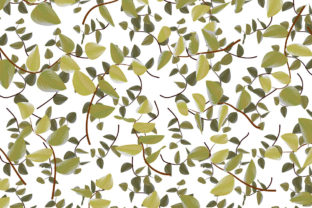
Evaluating the Floral Natural Branches Pattern for Professional Design Workflows
In the realm of digital surface design and print media, the distinction between generic stock imagery and a truly functional design asset often lies in technical versatility. The Floral Natural Branches Pattern represents a specific category of organic vector art that prioritizes structural integrity alongside aesthetic appeal. For professionals ranging from packaging designers to textile printers, this resource is not merely a decorative element but a foundational tool for building complex visual systems. Its value proposition extends beyond the immediate visual impact of botanical illustration; it resides in the comprehensive file package that typically accompanies high-quality assets of this nature, specifically the inclusion of EPS files, JPEG previews, help documentation, and clear licensing terms.
Understanding the practical utility of this pattern requires looking past the surface-level beauty of intertwining stems and foliage. In professional environments, time is a currency as valuable as creativity. A well-constructed Floral Natural Branches Pattern serves as a modular component that can be scaled, recolored, and manipulated without degradation. When evaluating this asset for commercial or personal projects, one must consider how the interplay of file formats and usage rights translates into workflow efficiency and legal safety. This analysis explores the technical and practical dimensions of integrating such patterns into serious design work.
Technical Versatility Through Vector Architecture
The primary strength of any professional-grade Floral Natural Branches Pattern is its foundation in vector graphics, typically delivered via an EPS (Encapsulated PostScript) file. Unlike raster images composed of fixed pixels, vector-based branch patterns rely on mathematical paths. This distinction is critical for designers working across multiple media. A pattern intended for a business card must also be viable for large-format signage or fabric bolt printing. The EPS format ensures that the intricate details of leaf veins and stem curvature remain crisp at any resolution.
Furthermore, the vector structure allows for non-destructive editing. Professionals rarely use a pattern exactly as downloaded. The ability to isolate individual branches, adjust stroke weights, or modify the color palette to match specific brand guidelines is essential. High-quality EPS files for floral patterns are constructed with clean anchor points and logical layering. Poorly digitized vectors often contain overlapping paths or excessive nodes that make editing tedious and result in large file sizes. When assessing a Floral Natural Branches Pattern, inspecting the node structure and layer organization within the EPS file is a necessary step to ensure long-term usability.
The Role of Raster Previews in Asset Management
While the EPS file is the production master, the included JPEG file serves a distinct operational purpose. For agencies and freelancers managing extensive digital asset libraries, opening vector files solely to verify content is inefficient. The JPEG acts as a lightweight visual reference, enabling rapid sorting, client presentation, and mood board creation without taxing system resources. A high-resolution JPEG preview should accurately represent the color fidelity and composition of the source vector, serving as a reliable proxy during the selection phase of a project.
Navigating Licensing and Commercial Compliance
Creative excellence cannot exist without legal security. The license file included with a Floral Natural Branches Pattern is arguably the most important document in the package, yet it is frequently overlooked until a dispute arises. Professional users must distinguish between personal, commercial, and extended commercial licenses. A standard commercial license might cover digital designs and limited-run prints, while an extended license is often required for products intended for resale, such as wallpaper, textiles, or stationery sold in retail environments.
Ambiguity in licensing is a significant risk factor. Reliable resources provide explicit terms regarding attribution requirements, modification rights, and restrictions on redistribution. For entrepreneurs and small business owners, understanding these boundaries prevents costly cease-and-desist issues down the line. When evaluating this pattern, verify whether the license permits the pattern to be used as a standalone element or if it must be incorporated into a larger derivative work. Clear, accessible licensing transforms a simple graphic into a secure business asset.
Documentation as a Workflow Accelerator
The inclusion of a Help File distinguishes premium assets from amateur offerings. While experienced designers may navigate Illustrator or CorelDRAW intuitively, specific patterns sometimes utilize unique construction methods, custom brushes, or specialized swatch definitions. A dedicated help document reduces the learning curve by explaining how to seamlessly tile the pattern, how to access hidden layers, or how to apply specific color profiles. This documentation demonstrates the creator’s commitment to user success and significantly reduces support inquiries, making the asset more self-sufficient and reliable for deadline-driven projects.
Practical Applications and Audience Fit
The Floral Natural Branches Pattern occupies a versatile niche suitable for various industries. Its organic flow makes it particularly effective in contexts where rigid geometry feels inappropriate. However, its suitability depends heavily on the specific style of the botanical illustration and the end-use case.
- Packaging Design: Cosmetic and wellness brands frequently utilize natural branch motifs to convey purity and sustainability. The vector format allows these patterns to wrap around curved surfaces like bottles and tubes without distortion.
- Textile and Fashion: Surface pattern designers use branch structures as base layers for repeating prints. The seamless tiling capability of a well-made EPS file is paramount here to avoid visible seams on fabric rolls.
- Editorial and Stationery: Wedding invitations, book covers, and luxury stationery benefit from the elegance of fine-line botanical art. The scalability ensures that delicate details remain legible even at small sizes.
- Digital Interfaces: Web designers and app creators may use rasterized versions of the pattern as subtle background textures or hero section elements, adding depth to flat UI designs.
For educators and content creators, this type of pattern offers a neutral yet engaging backdrop for worksheets, certificates, and social media templates. The key is adaptability; the pattern must be subtle enough not to interfere with text readability while providing sufficient visual interest to elevate the perceived value of the material.
Assessing Quality and Long-Term Value
Not all floral patterns are created equal. When determining if a specific Floral Natural Branches Pattern warrants investment, several quality indicators should be scrutinized. First, evaluate the artistic coherence. Do the branches connect logically, or do they appear disjointed? Naturalistic patterns require an understanding of plant anatomy; stylized patterns require consistent geometric rules. Inconsistencies in line weight or shading style can undermine the professional appearance of the final product.
Second, consider the future-proofing of the file formats. While EPS is an industry standard, compatibility with newer software versions matters. Assets that have been tested across Adobe Illustrator, Affinity Designer, and CorelDRAW offer greater flexibility for teams with diverse software ecosystems. Additionally, check for color mode availability. Patterns intended for print should ideally be available in CMYK or easily convertible without significant color shifting, whereas digital-focused assets should be RGB.
Long-term value also relates to trend resilience. Highly stylized or trendy floral interpretations may date quickly. Patterns based on classic botanical forms or timeless artistic styles tend to remain relevant longer, offering better return on investment for designers who build reusable template libraries. A Floral Natural Branches Pattern that balances contemporary aesthetics with traditional craftsmanship will serve a portfolio for years rather than months.
Limitations and Realistic Expectations
Despite their utility, these patterns have limitations that professionals must acknowledge. Vector floral patterns can become computationally intensive if they contain thousands of anchor points or complex gradients. Using such files in web environments or low-power devices requires optimization, such as simplifying paths or exporting to SVG/WebP formats. Furthermore, while the help file provides guidance, it cannot replace fundamental design skills. Integrating a pattern effectively still requires an eye for balance, contrast, and hierarchy.
Another consideration is the saturation of the market. Because floral patterns are ubiquitous, using a popular asset without significant modification can lead to designs that look derivative. Professionals should view the Floral Natural Branches Pattern as a starting point rather than a finished solution. Customizing colors, combining multiple pattern elements, or masking the pattern within unique shapes is necessary to maintain brand distinctiveness.
Ultimately, the decision to utilize this resource should be driven by project requirements and workflow constraints. For those needing a reliable, legally clear, and technically sound botanical foundation, the combination of EPS masters, JPEG references, comprehensive licensing, and user documentation provides a robust solution. It bridges the gap between artistic inspiration and production-ready assets, allowing creators to focus on innovation rather than asset generation. By critically evaluating the technical specifications and licensing terms, designers can confidently integrate Floral Natural Branches Patterns into their workflows, ensuring both creative satisfaction and professional compliance.